Monday, May 25th, 2026
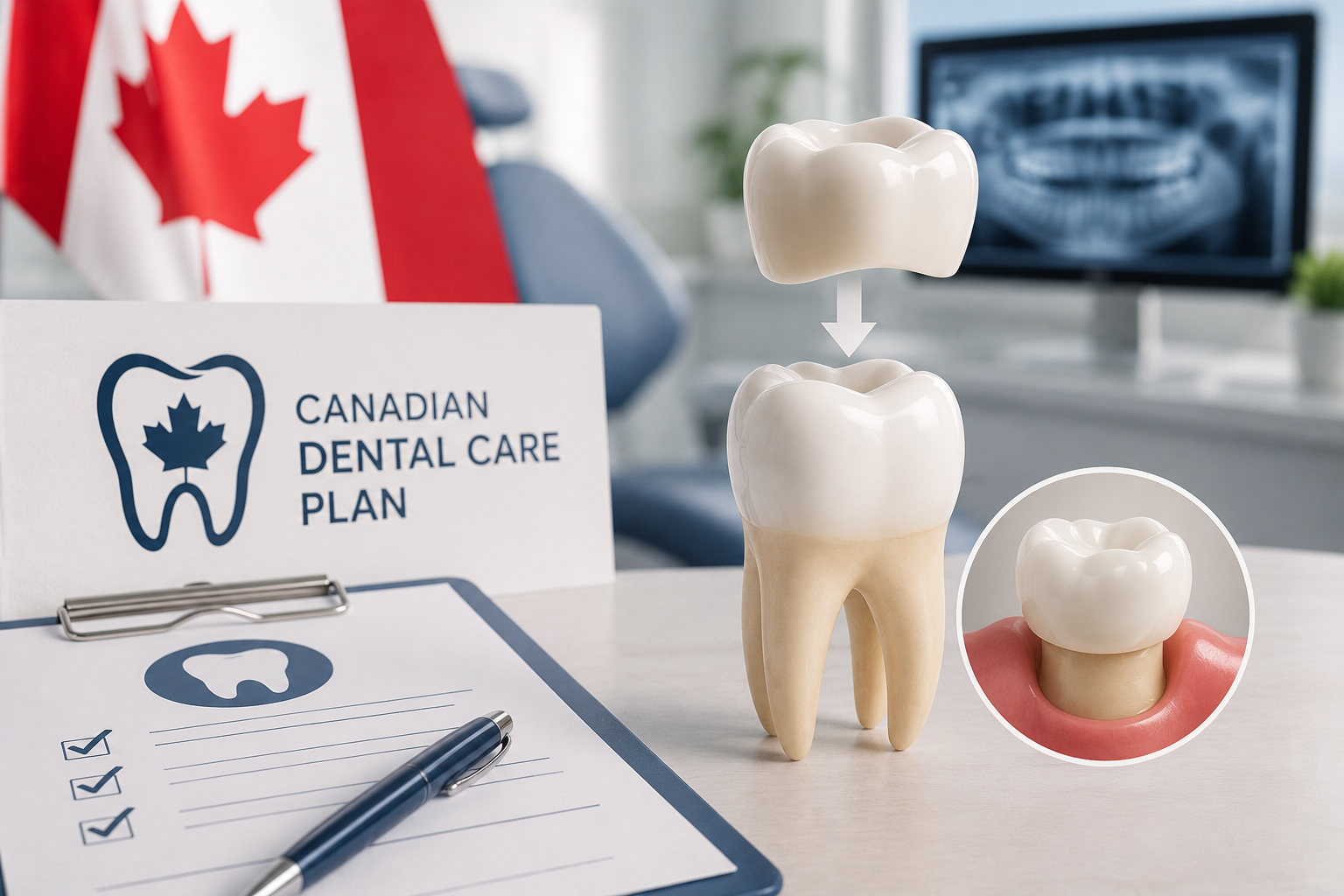
If your dentist has recommended a dental crown and you are enrolled in, or considering enrolling in, the Canadian Dental Care Plan, one of the first questions you may have is whether the treatment will be covered.
The short answer is yes, but coverage comes with certain conditions. Dental crowns may be covered under the CDCP when they are considered medically necessary and approved through the required preauthorization process. Coverage can also depend on factors such as frequency limits and household income.
Understanding how CDCP crown coverage works before beginning treatment can help you avoid unexpected costs and feel more confident about your dental care decisions.
The Canadian Dental Care Plan is a federal government program designed to make oral health care more accessible and affordable for Canadians who don’t have private dental insurance. Administered by Health Canada and managed day-to-day by Sun Life, the CDCP provides coverage for a broad range of dental services — from routine cleanings and X-rays to more complex restorative treatments like root canals, dentures, and crowns.
The plan is income-tested, meaning how much you pay out of pocket depends on your adjusted family net income. It is not a free dental program for everyone, but it can significantly reduce the cost of major dental work for eligible Canadians.
Yes, dental crowns are covered under the CDCP as a major restorative service, but coverage is not automatic or universal. The plan covers crowns only when they are considered medically necessary, not for cosmetic purposes.
Specifically, a crown is typically approved by the CDCP when:
Cosmetic dental crowns that are placed only to improve the appearance of a healthy tooth are generally not covered under the Canadian Dental Care Plan.
One of the most important things to understand about crown coverage under the CDCP is the preauthorization requirement. Unlike simpler procedures such as fillings or cleanings, crowns cannot be claimed retroactively — the approval must come before treatment begins.
Here’s how the preauthorization process works:
Skipping the preauthorization process can result in your dental crown not being covered under the CDCP, even if you are otherwise eligible for benefits. Before starting treatment, it is important to confirm with your dentist that preauthorization has been properly completed and approved.
The CDCP places specific limits on how often crown coverage can be accessed to prevent overuse. Current limits include:
In exceptional circumstances, exceptions to these frequency limits may be granted through preauthorization if there is a clinically justified reason.
Also read: Root Canal Before and After: What to Expect
Even with CDCP coverage, you may not have the full cost of your crown covered. How much you contribute depends on your adjusted family net income:
| Adjusted Family Net Income | CDCP Covers | You Pay |
|---|---|---|
| Under $70,000 | 100% of eligible fees | Nothing (co-payment) |
| $70,000 – $79,999 | 60% of the eligible fees | 40% co-payment |
| $80,000 – $89,999 | 40% of eligible fees | 60% co-payment |
It’s important to note that these percentages apply to the CDCP’s own established fee schedule, not necessarily to what your dentist actually charges. If your dentist’s fee for a crown is higher than the CDCP rate — which is often the case — you will be responsible for the difference on top of any co-payment. This is called balance billing, and it is permitted under the CDCP.
Before proceeding with a crown, ask your dental office for a clear breakdown of the CDCP-covered amount versus the total fee so you know exactly what to expect.
Understanding what the CDCP excludes is just as important as knowing what it includes. The following are not covered:
Annual Benefit Limit
Since January 1, 2025, the CDCP has increased the annual reimbursement limit to $3,000 per year per eligible person. This covers the combined total of all services used throughout the year, including preventive care, fillings, and any major procedures like crowns. If your total dental costs in a year exceed this amount, the remaining costs fall to you.
A few practical steps can help you avoid surprises and maximize your benefit:
The Canadian Dental Care Plan can help cover the cost of dental crowns when they are considered medically necessary and approved through the preauthorization process. Depending on your household income, eligible Canadians may receive significant coverage, making restorative dental care much more affordable.
Brookmere Dental Group proudly accepts CDCP coverage and is committed to helping eligible patients access quality dental care with confidence. If you have questions about dental crowns or your coverage options, our friendly team is here to help guide you through the process.
Does Brookmere Dental Group accept the Canadian Dental Care Plan for dental crowns?
Yes, at Brookmere Dental Group we proudly accept the Canadian Dental Care Plan (CDCP). Our team can help you understand your coverage, review your eligibility, and guide you through the process for dental crown treatment.
Can you help me with the CDCP preauthorization process for crowns?
Absolutely. Our team will assist you with the CDCP preauthorization process before your treatment begins. We work directly with Sun Life to submit the required documentation so you can better understand your expected coverage and out-of-pocket costs.
Will I have to pay anything for a dental crown under the CDCP?
Your costs depend on your adjusted family net income and the CDCP fee schedule. During your visit with us, we will provide a clear breakdown of what the CDCP may cover and any remaining balance you may be responsible for before treatment starts.
Does Brookmere Dental Group offer crowns after root canal treatment?
Yes, we often recommend dental crowns after root canal treatment to help protect and strengthen the tooth. If the crown is considered medically necessary, it may qualify for CDCP coverage once preauthorization is approved.
How do I know if my dental crown is medically necessary?
When you visit us, our dentist will carefully examine your tooth and determine whether a crown is the most appropriate treatment. Dental crowns are commonly recommended for severely damaged, weakened, or root canal-treated teeth.
Can I book a consultation with Brookmere Dental Group to discuss CDCP coverage?
Yes, you can contact Brookmere Dental Group to schedule a consultation. Our friendly team is happy to answer your questions about dental crowns, CDCP coverage, and available treatment options.