
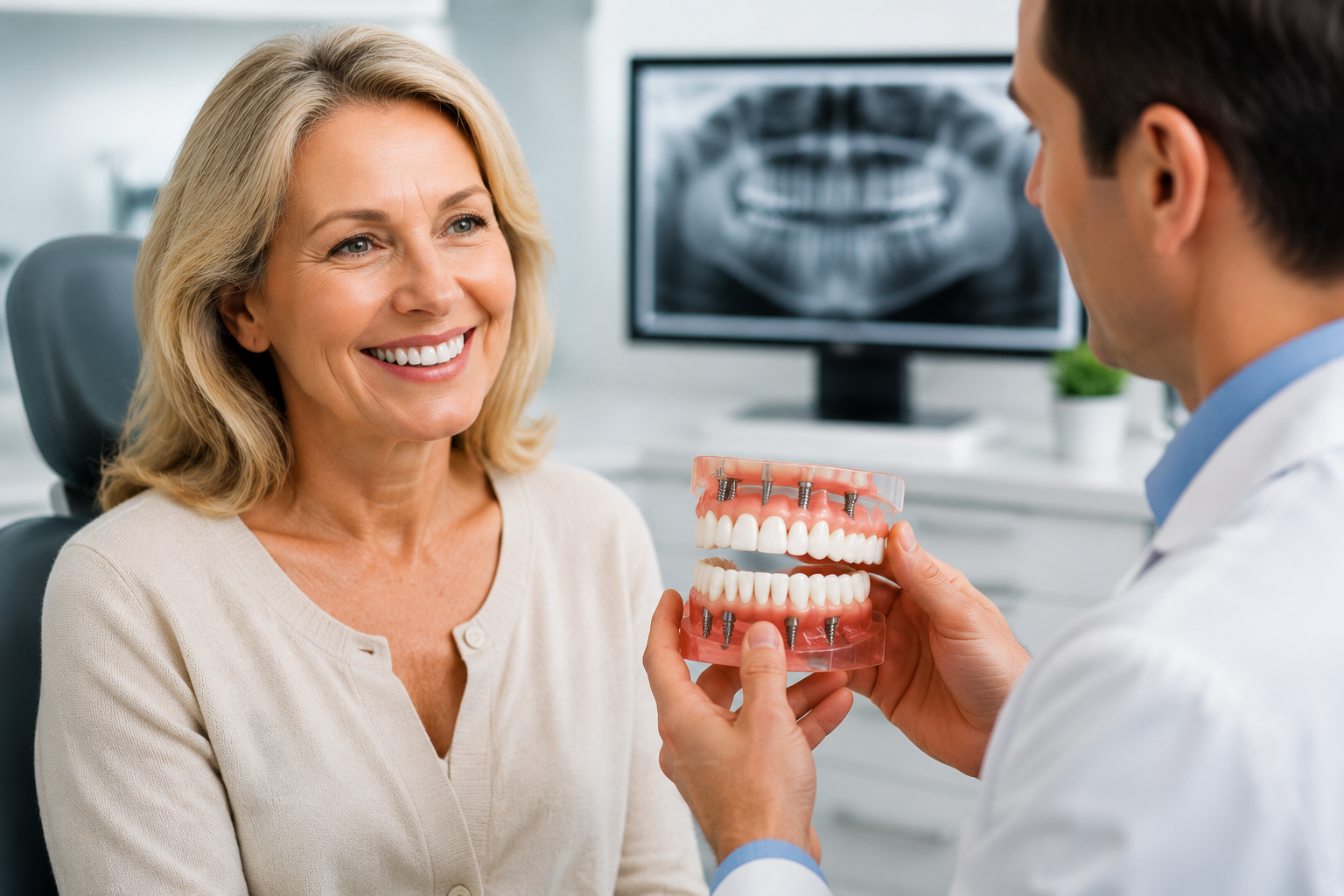
Since many Canadians rely on the Canada Dental Care Plan for oral health services, one of the most common questions patients ask is whether dental implants are covered. The short answer is no—dental implants are generally not included under the CDCP. While the program helps eligible Canadians access a wide range of preventive, diagnostic, restorative, and denture-related treatments, implant surgery and implant-supported restorations are typically excluded from coverage.
Because dental implants can be a significant investment, it is important to understand what the CDCP does cover, what alternative tooth replacement options may be available, and whether private dental insurance can help reduce out-of-pocket costs before making a treatment decision.
Are Dental Implants Covered Under Canada’s Dental Care Plan?
At present, dental implants are not considered a standard covered benefit under the plan. This means patients are usually responsible for the cost of:
- Dental implant surgery
- Implant-supported crowns
- Implant-supported bridges
- Implant-supported dentures
- Bone grafting is associated with implant treatment
- Other implant-related procedures
Many people are surprised by this because dental implants are widely regarded as one of the best tooth replacement options available. However, coverage decisions are based on the need to provide access to essential dental services to the largest number of eligible patients.
For individuals missing one or more teeth, it is important to discuss all available treatment options with a dentist to determine which solution best meets both oral health needs and budget considerations.
Why Doesn’t the Plan Cover Dental Implants?
Dental implants are highly effective, but they are also one of the most expensive restorative dental treatments available.
The program focuses primarily on services that help prevent disease, treat oral health problems, relieve pain, and restore basic function. Because less costly alternatives such as dentures can often replace missing teeth, implants are generally classified as an advanced treatment rather than an essential covered service.
This does not mean implants are unnecessary. In many cases, they provide significant long-term benefits. However, the current coverage model prioritizes treatments that can serve the greatest number of eligible patients within available funding.
What Dental Services Are Covered Instead?
Although dental implants are generally excluded, the plan covers many important dental services.
Preventive Services
Preventive care helps patients maintain healthy teeth and gums before serious problems develop.
Covered services may include:
- Dental examinations
- Professional cleanings
- Fluoride treatments
- Dental sealants
- X-rays
Restorative Services
These treatments help repair damaged teeth and restore function.
Examples include:
- Fillings
- Certain cavity treatments
- Temporary restorations
Endodontic Services
Coverage may include treatment designed to save natural teeth, such as root canal therapy.
Oral Surgery
Certain surgical procedures, including extractions, may be covered when clinically necessary.
Prosthodontic Services
Coverage may extend to complete and partial dentures in qualifying situations.
Because coverage guidelines can change, patients should always confirm eligibility before treatment begins.
Are Dentures Covered?
Yes, dentures are among the tooth replacement options that may qualify for coverage.
Complete dentures can replace all missing teeth in an arch, while partial dentures replace several missing teeth when natural teeth remain.
For patients who cannot pursue implant treatment due to cost considerations, dentures often provide a practical and affordable solution.
While dentures do not offer the same stability as implants, modern denture technology has improved significantly, providing better comfort and appearance than ever before.
Are Dental Bridges Covered?
In some situations, dental bridges may be considered as an alternative treatment option.
A bridge replaces one or more missing teeth by using neighboring teeth for support. Coverage eligibility depends on specific treatment requirements and approval criteria.
Because every case is different, your dentist can help determine whether a bridge is appropriate for your situation and whether coverage may be available.
Can Private Insurance Cover Dental Implants?
Private dental insurance may help reduce the cost of implant treatment.
Coverage varies significantly depending on the provider and policy. Some plans:
- Cover a portion of implant-related procedures
- Cover the crown attached to the implant
- Offer reimbursement for diagnostic imaging
- Provide benefits toward restorative treatment
Other plans may exclude implants entirely.
Before proceeding with treatment, it is worth reviewing your policy carefully and requesting a predetermination of benefits whenever possible.
Can Medical Insurance Cover Dental Implants?
In most cases, routine dental implant treatment is not covered under standard medical insurance.
However, exceptions may exist when tooth loss results from:
- Severe facial trauma
- Congenital conditions
- Major reconstructive surgery
- Certain medically necessary treatments
These situations are relatively uncommon and often require extensive documentation and approval.
Patients with complex medical circumstances should discuss potential coverage options with both their healthcare providers and insurance companies.
How Much Do Dental Implants Cost Without Coverage?
The cost of dental implants varies depending on the complexity of treatment.
Factors that influence cost include:
- Number of implants required
- Type of restoration
- Bone grafting requirements
- Jawbone condition
- Treatment complexity
- Geographic location
A single missing tooth typically requires:
- An implant post
- An abutment
- A custom dental crown
Patients replacing multiple teeth or an entire arch may require more extensive treatment.
A personalized consultation is the best way to obtain an accurate estimate.
What Factors Affect Dental Implant Costs?
Several variables influence the overall investment associated with implant treatment.
Number of Missing Teeth
Replacing multiple teeth generally requires additional implants or more complex restorations.
Bone Health
Patients with insufficient jawbone may require bone grafting before implant placement.
Type of Restoration
A single crown, bridge, or implant-supported denture will have different treatment costs.
Technology and Materials
High-quality implant systems, advanced imaging, and digital treatment planning contribute to successful long-term outcomes.
Dentist Experience
Training, expertise, and experience play an important role in implant success and treatment planning.
Are Dental Implants Worth the Cost?
For many patients, dental implants are considered one of the best long-term investments in oral health.
Unlike removable dentures, implants function similarly to natural teeth and help preserve jawbone structure.
Benefits include:
- Natural appearance
- Improved chewing ability
- Better speech
- Enhanced comfort
- Long-term durability
- Jawbone preservation
- Increased confidence
Many patients appreciate that implants provide a stable, long-lasting solution that can significantly improve quality of life.
What Are the Alternatives to Dental Implants?
Patients who are not candidates for implants or prefer a lower-cost option may consider alternative treatments.
Dentures
Dentures replace multiple missing teeth and can often be completed more quickly than implant treatment.
Dental Bridges
Bridges provide a fixed solution for replacing one or more missing teeth.
Partial Dentures
Partial dentures offer a removable option when several natural teeth remain.
The best treatment depends on factors such as oral health, lifestyle, budget, and long-term goals.
Restore Your Smile With Brookmere Dental Group
Missing teeth can affect your confidence, oral health, and everyday comfort. If you’re considering dental implants and have questions about treatment costs, insurance coverage, or available alternatives, the team at Brookmere Dental is ready to help.
We take the time to explain every option clearly, helping you understand the benefits of implants, bridges, dentures, and other restorative treatments. Our goal is to provide personalized care that supports your oral health needs while helping you make confident decisions about your smile.
Book a consultation with us today and discover the tooth replacement solution that’s right for you. A healthier, stronger, and more confident smile starts with expert guidance and compassionate care.
Frequently Asked Questions
Why are dental implants not covered?
The program focuses on essential dental services and lower-cost treatment options that help restore oral function for eligible Canadians.
Are implant-supported dentures covered?
No. Because they rely on dental implants, implant-supported dentures are generally excluded from coverage.
Are regular dentures covered?
Yes. Complete and partial dentures may qualify for coverage depending on eligibility and treatment requirements.
Can seniors get dental implant coverage?
The coverage rules are generally the same for eligible patients regardless of age. Dental implants are not typically covered.
Does private insurance cover dental implants?
Some private insurance plans provide partial coverage for implant-related procedures, while others exclude implants entirely.
Can I use a Health Spending Account for dental implants?
In many cases, eligible Health Spending Accounts can be used to help offset dental implant expenses.
What is the cheapest alternative to dental implants?
Removable dentures are often the most affordable tooth replacement option.
Are dental implants better than dentures?
Dental implants generally provide greater stability, comfort, and jawbone preservation, but the best option depends on the patient’s needs and budget.
How long do dental implants last?
With proper care and regular dental visits, dental implants can last for decades and may even last a lifetime.
Can dental bridges replace missing teeth instead of implants?
Yes. Dental bridges are a common alternative for replacing one or more missing teeth.
What happens if I cannot afford dental implants?
Your dentist may recommend alternatives such as dentures, bridges, phased treatment plans, financing options, or available insurance benefits.
Are dental implants worth the investment?
Many patients believe they are because implants offer durability, comfort, natural appearance, and long-term oral health benefits.
Who is a good candidate for dental implants?
Most healthy adults with sufficient jawbone density and healthy gums may be good candidates for implant treatment.
How do I know which tooth replacement option is best for me?
The best tooth replacement option depends on several factors, including your oral health, the number of missing teeth, your long-term goals, and your budget. At Brookmere Dental Group, our team will perform a comprehensive examination and discuss your treatment options, including dental implants, bridges, and dentures, to help you choose the solution that best fits your needs and lifestyle.
About The Author
